Forestry Mulching vs. Conventional Clearing: Start With the Finish
Home › Blog › Forestry Mulching vs. Conventional Clearing: Start With the Finish
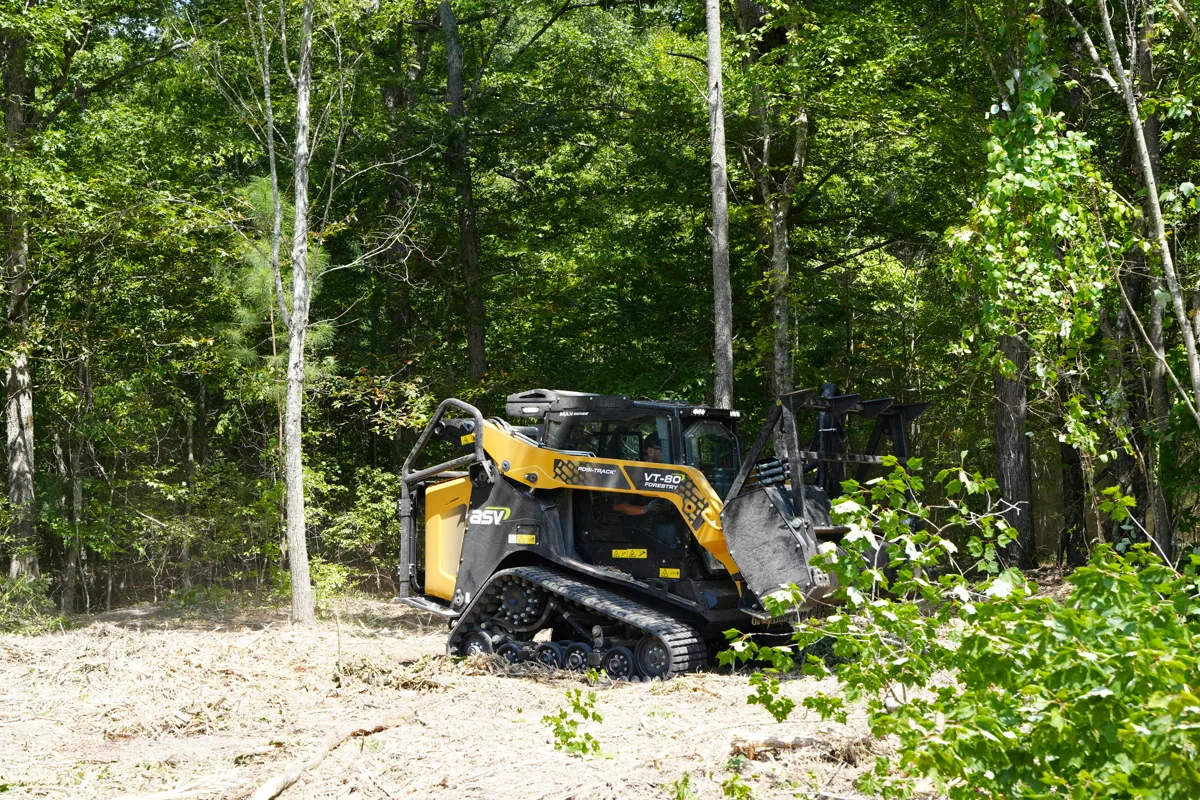
“Land clearing” describes an outcome. The method should follow the vegetation, the next use, and the finish the property actually needs.
What forestry mulching changes
Forestry mulching processes suitable brush, saplings, and vegetation in place. The material stays on the ground instead of being represented as hauled away. This approach can open access, reclaim edges, improve visibility, and make an overgrown area easier to walk or maintain. It can also work selectively around features the owner marks to keep.
The finish depends on vegetation, density, terrain, the number of passes, and the written project plan. Mulched ground is not automatically smooth, graded, seeded, or ready for a foundation. Stumps, large trees, buried debris, rock, and other conditions may require a different method or a separate phase. An honest walkthrough identifies those limits before the owner approves a price. The goal is not to make mulching sound like every other kind of sitework. The goal is to use it where it fits and define what will remain.
When conventional clearing is a different conversation
If the project supports a home, barn, shop, driveway, or another improvement, ask the builder or site contractor what condition they need before their phase begins. Then compare that requirement with the clearing estimate. A mulched area may be the right first step, or it may be only one part of a larger sequence. We can describe our forestry-mulching phase and grapple work. Engineering, permitting, excavation, grading, and construction remain separate responsibilities unless another qualified provider is involved.
We mention this not to limit what a property owner can accomplish, but to make the estimate honest. A mulched surface and a graded building site are not the same product. If the next step requires a specific grade, drainage preparation, or compaction, that work belongs in a separate estimate from a contractor qualified to perform it. Knowing that in advance lets you plan the full project sequence rather than treating the clearing estimate as a complete solution.
The practical decision
We evaluate properties from Murfreesboro across a 70-mile Middle Tennessee service radius. Call (629) 219-5178 with the location, approximate work area, access information, vegetation description, and desired result. Photos help with the first conversation, but the site-specific estimate should settle the method, project plan, and finish before production begins.
Ready to make your property easier to use and maintain?
Tell us where the property is, what the area looks like now, and what you want to accomplish. We’ll help you determine the best next step and build a clear scope for the work.
Request an Estimate